

Aristocracy Shaped
by the Sea
Sozopolis, Bulgaria
A contemporary residence shaped by the memory of classical ornament.
Set on the Black Sea coast, the interior explores the point where architectural tradition meets contemporary making. Classical proportions, mouldings and decorative motifs are retained, but their familiar language is interrupted by sculptural furniture, reflective surfaces and precisely fabricated details.
Rather than recreating the past, the project takes fragments of it and gives them a new function.
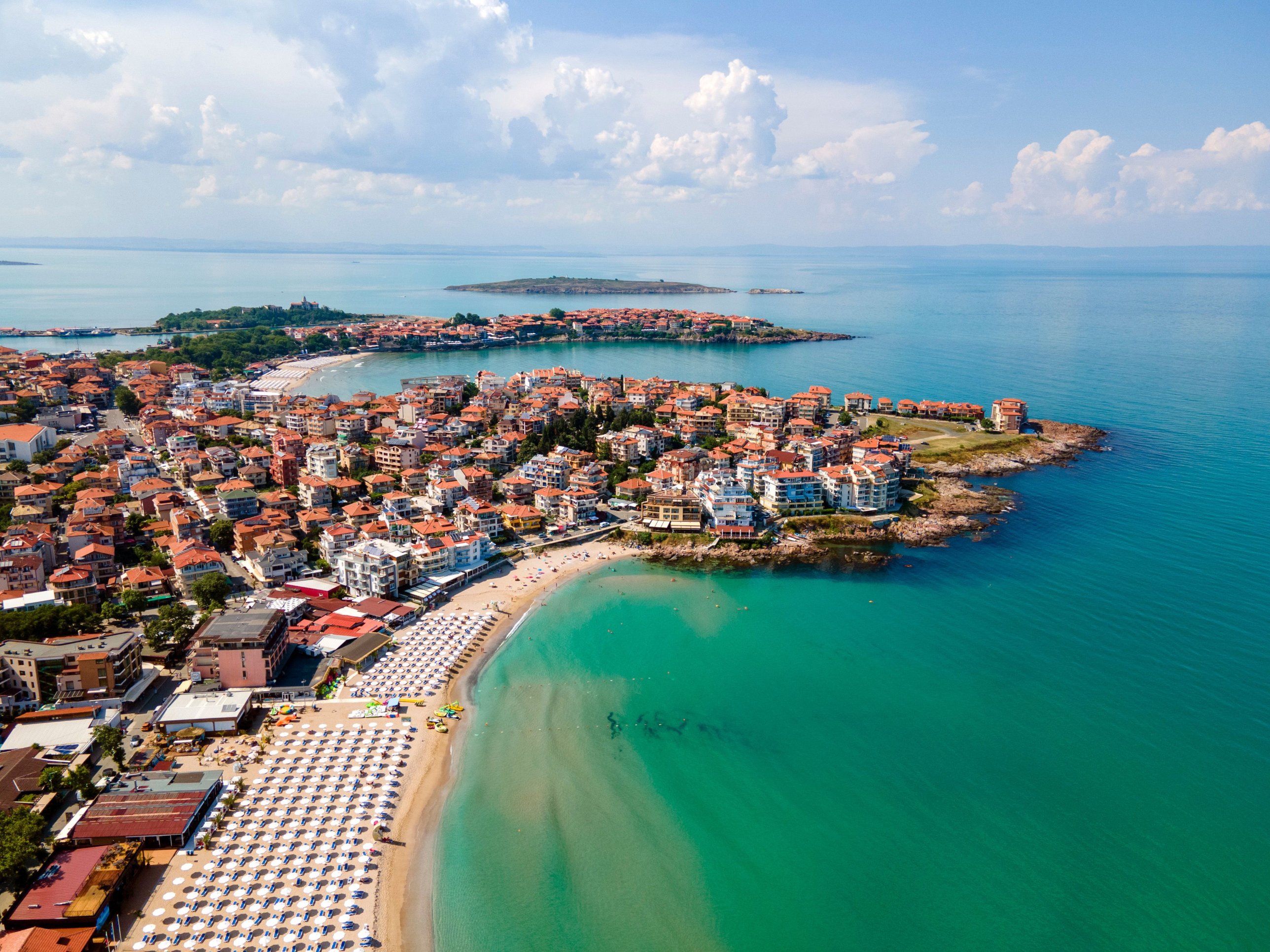
COASTSozopolis, Bulgaria
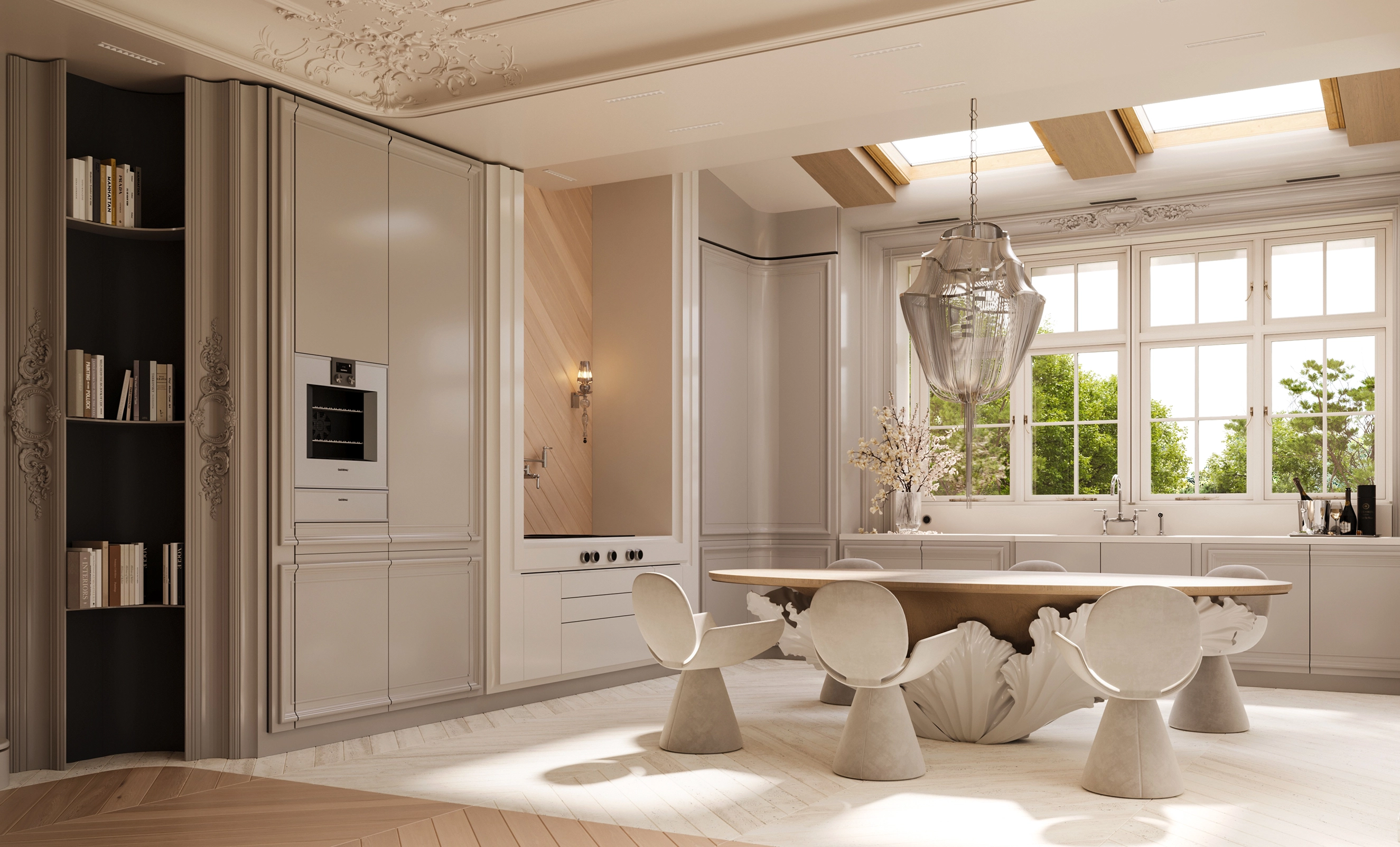
Classical mouldings move across walls, cabinetry and ceilings, establishing continuity throughout the residence. Yet the composition remains deliberately restrained: large quiet surfaces give every decorative intervention space to exist independently.
The result is neither traditional nor minimal. It occupies the territory between the two.
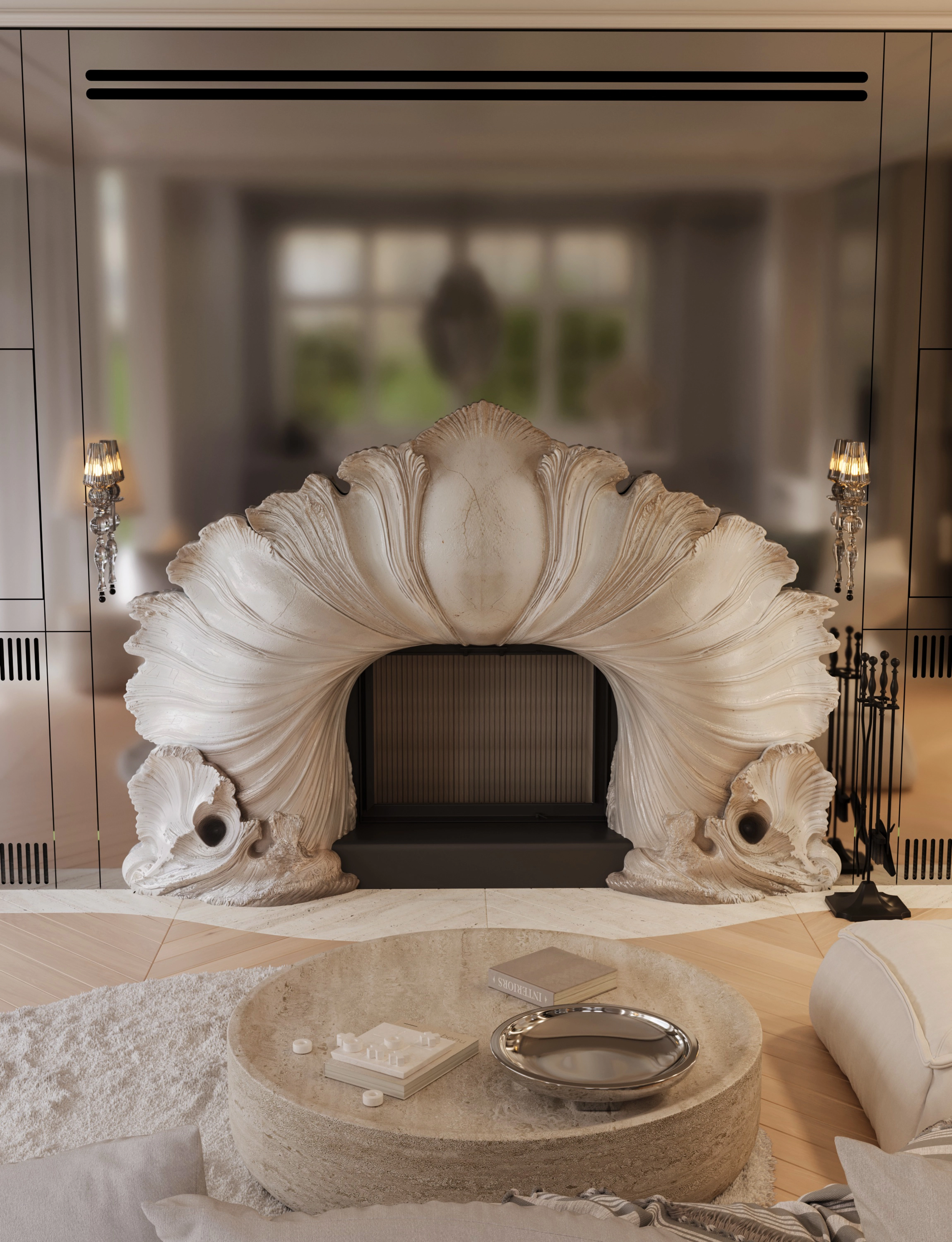
The dining table grows from an expressive sculptural base; the fireplace becomes an oversized architectural ornament; vanities and decorative frames are treated with the same attention normally reserved for individual works of art.
Many of the defining pieces were designed specifically for the residence, allowing furniture, object and architecture to share one visual language.
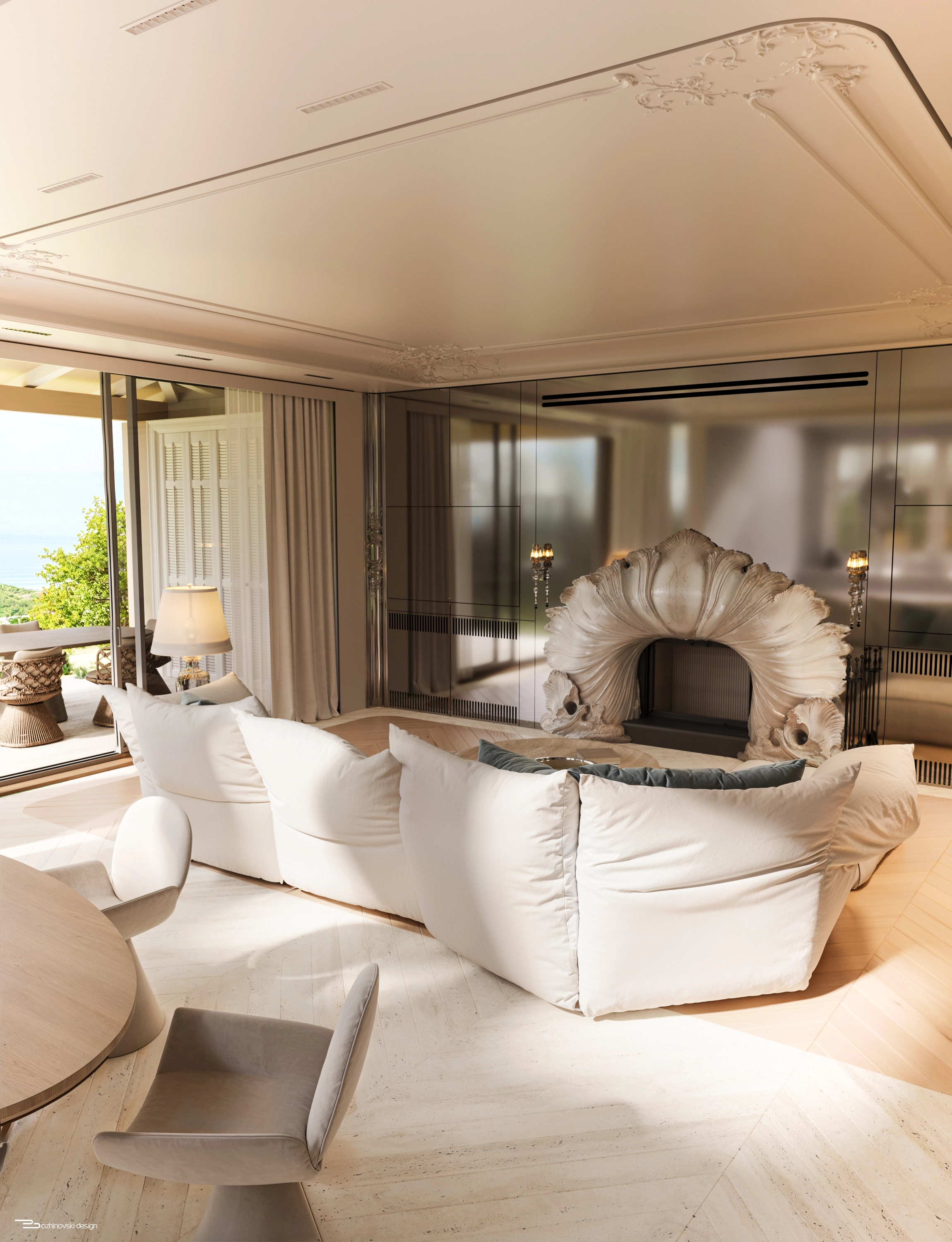
The fireplace surround expands outward in layers of carved organic form, becoming the visual centre of the living space. Behind it, a broad reflective surface dissolves the boundary of the wall and introduces another dimension to the room.
The contrast is deliberate: a highly expressive sculptural object placed against an almost immaterial background.
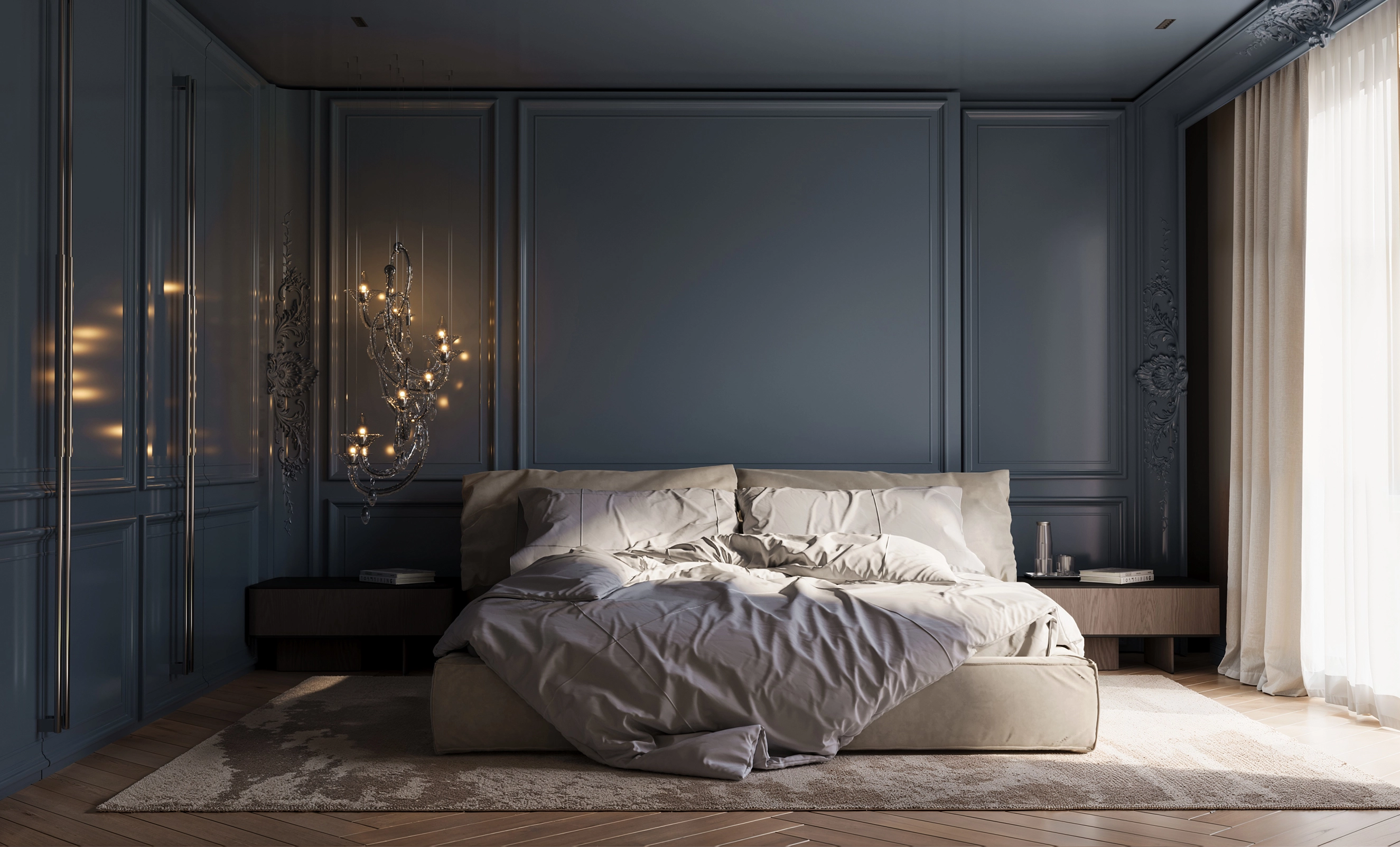
Reflection amplifies the natural light arriving from the sea.

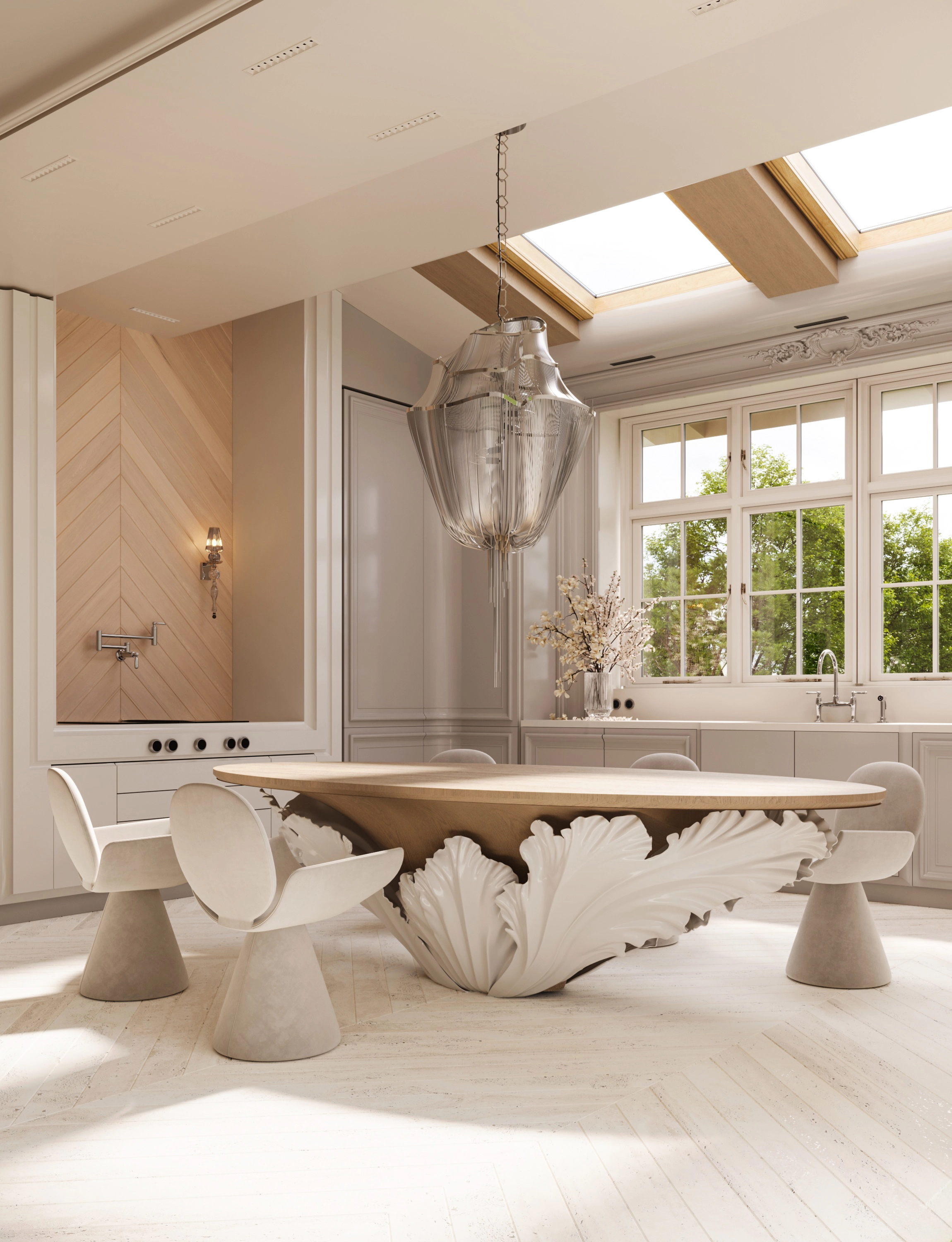
Smoked mirror, polished metal, glass and illuminated surfaces are used throughout the residence to extend perspectives and capture changing daylight.
In the brighter living areas, reflection amplifies the natural light arriving from the sea-facing façade. In the bedrooms and bathrooms, the same materials become darker and more intimate — transforming the character of the interior without changing its underlying language.
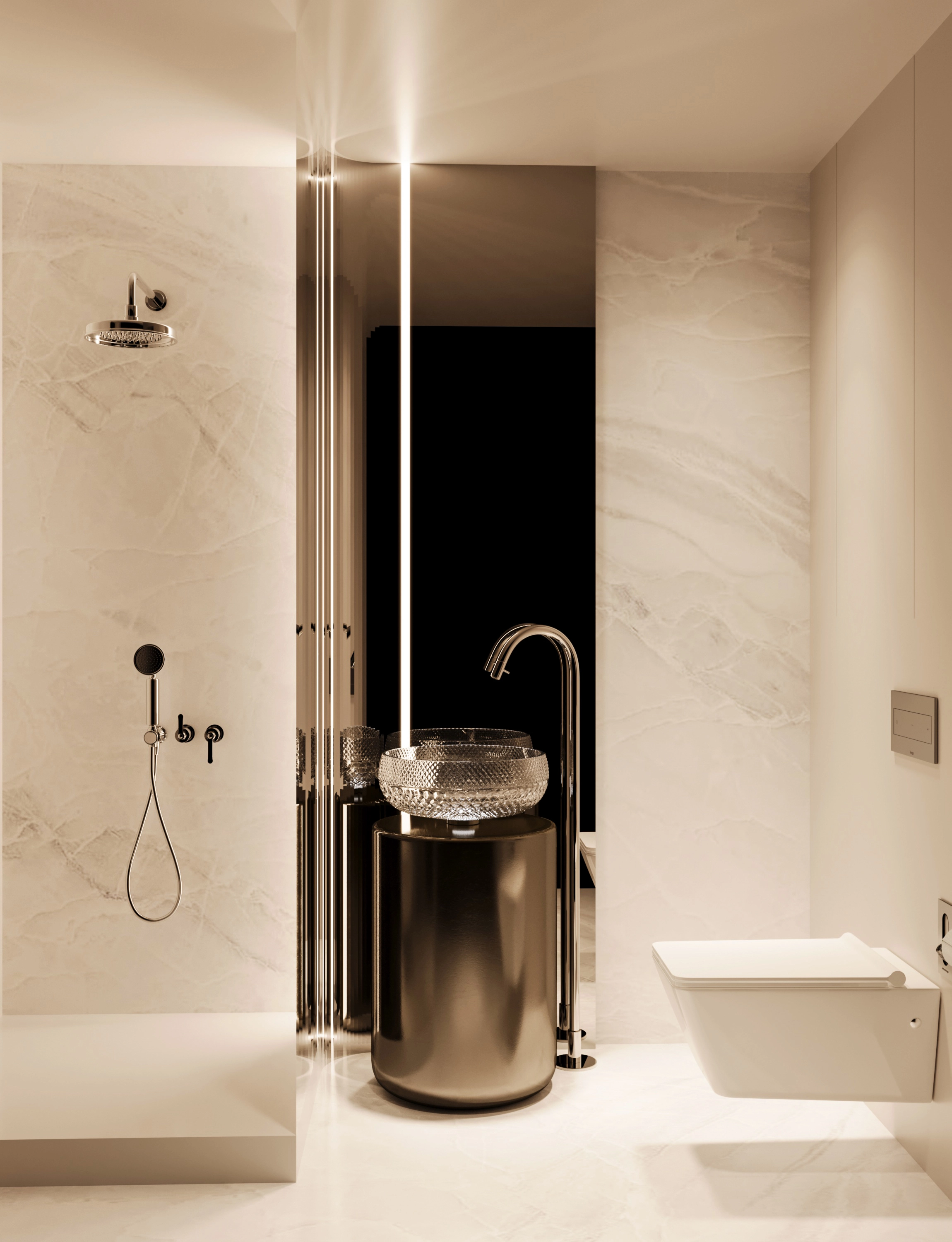
Bedrooms move into deeper tones, where classical wall panelling is reduced to shadow and line. Bathrooms become more experimental: marble, ribbed glass, polished metal and sculptural sanitary elements introduce a sharper, almost jewel-like precision.
Each room has its own atmosphere, while remaining unmistakably part of the same residence.
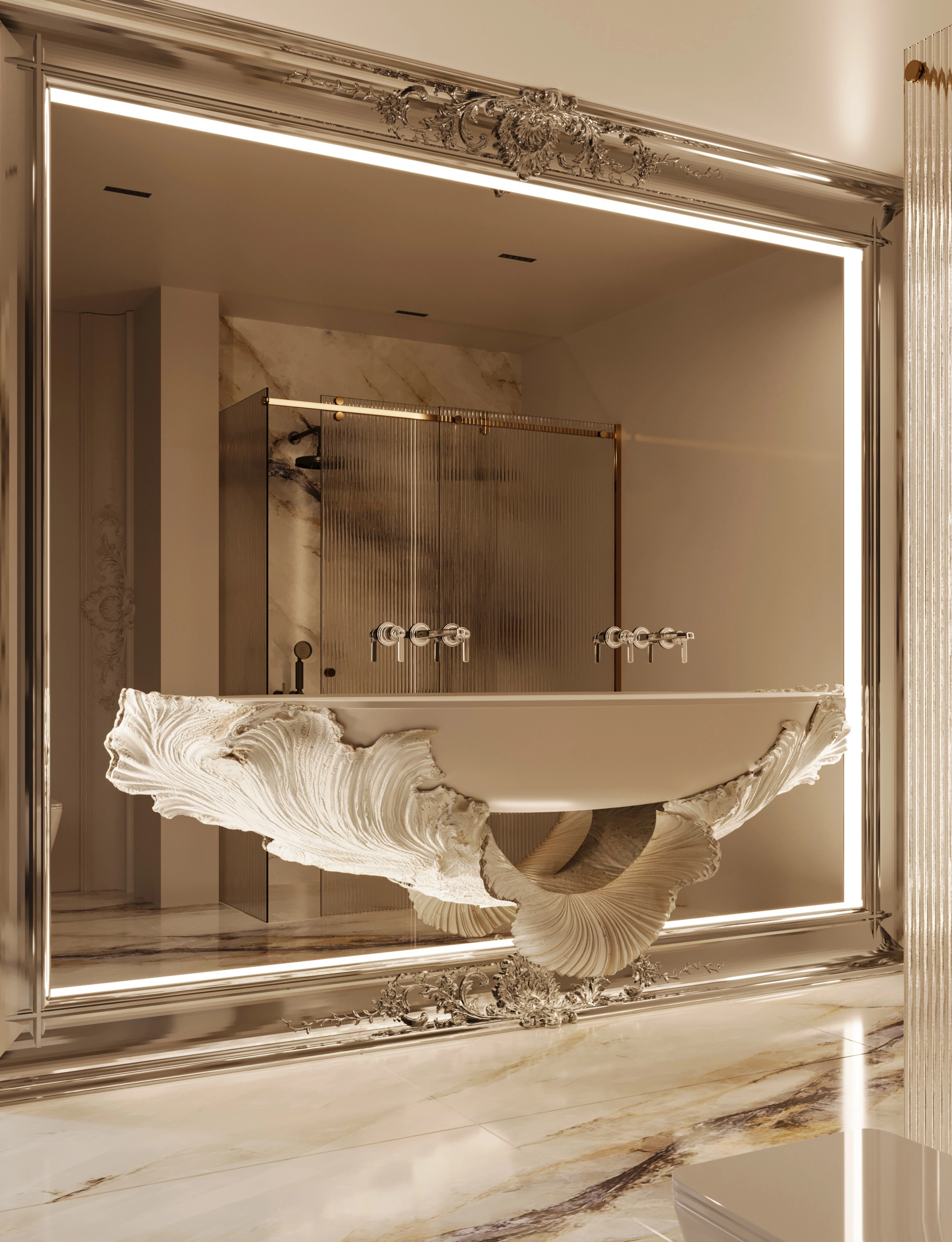
Bespoke furniture, carved ornament, custom joinery and individually developed decorative elements were designed as an integral part of the architecture.
This allows the residence to feel collected rather than decorated — as though its objects have always belonged to the rooms they occupy.
Where classical memory meets contemporary form.
